
In the remote hills of southwest Manipur, along jungle paths that wound through dense bamboo forests, a young Welsh missionary named Watkin R. Roberts followed the call of God in February 1910. He had received a letter from Senvawn — a Hmar village — that simply said: “Sir, come yourself, and tell us about this book and your God.” That short, earnest invitation set in motion one of the most remarkable chapters in the history of Christianity in Northeast India. What began with one man answering one plea became the Independent Church of India — a community of faith that, across more than a century, has outlasted persecution, internal conflict, colonial interference, and every storm that sought to destroy it.
This is the story of that church. It is not always a tidy story. It is the story of faithful men and women who refused to give up — who believed in the God who does not abandon his people — and who built a living church in the hills of Manipur that now stretches from Myanmar to Delhi, from Wales to South Korea.
I. The Dawn of the Gospel in Manipur South (1910–1914)
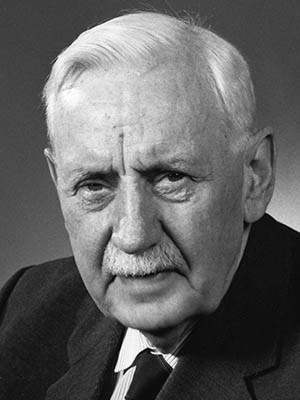
On February 5, 1910, Watkin R. Roberts arrived at Senvawn, accompanied by a small group of Lushai Christian converts. He was a man of extraordinary resolve — a Welshman who had left the comforts of Britain not for adventure but for the souls of people he had never met. He had heard of the people of these hills through accounts of tribal life in the hills, and he had prayed for years that God would open a door. The invitation from Senvawn was that door.
Roberts had already been working in the Lushai Hills in Assam under the Thado-Kookie Pioneer Mission, which he had founded. But Manipur was uncharted territory for evangelical mission. No established church had yet planted roots there. The people of the hills — the Hmar, Vaiphei, Gangte, Paite, and other Kuki-Chin tribes — lived in villages governed by chiefs, sustained by agriculture, marked by animistic religious practice and, in times of plenty, by communal feasting and by, in times of hardship, by deep suffering.
The early workers were not ordained clergy but young believers — Savawma, Vanzika, Thangchhingpuia, Dengrum, and others — who had studied with Roberts in Aijal. They came first to Senvawn-Kawnzar, and from there walked to surrounding villages, carrying the Gospel with simple speech. As one historian of the church recorded their method: “Visiting every home, the main ‘preaching’ they did consisted of just one sentence, an invitation: ‘Please you also believe in the Lord Jesus Christ.'” Yet those few words, spoken in faith and with love, pierced hearts.
Within months, believers multiplied. By 1911, workers had moved into Tuithaphai in the Khuga Valley. By 1912, new missionaries had reached the Vaiphei area — Thangkai to Bualtang, Lungpao to Maite — where six people became Christians immediately upon hearing the Gospel. From Senvawn, as Roberts wrote, “the circle of waves became wider and wider after a stone is thrown in the water.” Christians appeared in Parbung, Leisen, Bekra, Saichang, and the Gangte area. By 1912, 248 Christians were counted among the Vaiphei people alone.
Two years after Roberts first arrived, in December 1914, the Mission held its first Presbytery Conference at Senvawn. This was a watershed moment. The young church now had structure. R. Dala — a beloved leader and scholar who had accompanied Roberts from Aijal — was consecrated as Pastor. Twenty-five resolutions were passed that day, covering everything from evangelism strategy to the care of orphans, from worker salaries to the administration of marriage ceremonies. The church was no longer an informal movement; it had become an institution with deep roots and God-given order.
II. Growth, Opposition, and the Name “NEIGM” (1915–1929)
The years following the first Presbytery saw rapid expansion, even as forces of opposition began to gather. The Mission opened a School of Evangelism at Senvawn in 1915, and its graduates — among them Lienrum, Lamngul, Paozalian, and others — carried the Gospel further into tribes and valleys that had never heard the name of Christ.
In 1917, a great revival swept across the southern hills of Manipur, beginning at Senvawn. Hundreds were converted. The spirit of prayer was extraordinary. Workers multiplied. Mission stations were established in Tripura in 1918. By that same year, the Mission had extended its reach to Chittagong Hill Tracts (now Bangladesh). In 1924, missionaries were sent as far as Burma (Myanmar). The Mission had now grown to 700 Christian members. By 1924, the number had grown to over 7,000.
In 1924, Roberts renamed the Mission the North East India General Mission (NEIGM) — a name he gave, he said, “as a name is given to a newborn child.” The new name reflected the scale of what God had done: a mission born in one Hmar village now spanned Manipur, Tripura, Chittagong, Assam, and Burma.
That same year, when American supporter Howard B. Dinwiddie sailed for India at the invitation of the Mission’s newly formed American Council, he traveled by canoe and foot into the hills of Manipur. His detailed letters home remain precious accounts of a church alive with worship and hungry for the Word. Dinwiddie died on December 27, 1925, in the hills near Champhai, weakened by illness contracted on his journey — but not before he had communicated to the Council in America the urgent need for a Bible School. In his memory, the Dinwiddie Memorial Bible School was founded, later to become the R. Dala Memorial Bible School. In 1928, Rev. Paul Rostad and his wife Ella — graduates of Moody Bible Institute — arrived to run it, training the first generation of formally educated indigenous church leaders.
Tragedy and testing were never far away. In January 1922, R. Dala — the beloved first Pastor and Field Superintendent — died of cholera on the eve of the Presbytery at Jakradhor. The church was stunned. Yet revival fires from 1917 continued to burn even through grief. Pastor Taisena, one of the most consequential figures in the church’s history, was ordained at that Presbytery and would lead the church for decades to come.
During these years, the American Baptist Mission (ABM) sought to claim the entire territory of Manipur as its own missionary field, even though it had never worked in the southwest hills where the NEIGM had planted churches. This claim led to government intervention, persecutions, and the forced displacement of some Christian communities. Yet the faithful workers did not abandon their congregations. R. Dala traveled to Imphal to meet with the Political Agent — who turned out to be an old friend — and negotiated terms under which the NEIGM could continue its ministry. The church bent in the storm but did not break.
III. The Parting of Ways: Roberts, Coleman, and the Birth of the Independent Church (1929–1950)
The greatest crisis in the early church was not persecution from without but betrayal from within. By the late 1920s, H.H. Coleman — an American administrator installed by the NEIGM’s Philadelphia council — had maneuvered Roberts out of the very Mission he had founded. Using fabricated charges of financial misappropriation, Coleman secured Roberts’ effective dismissal in 1929. A thorough audit found no evidence of wrongdoing. Those who knew Roberts best — including Rohmingliana, who briefly defected before returning — came to understand that the accusations had been lies.
Roberts was heartbroken. In a long, tender letter to his people, he wrote: “You are constantly in my thoughts, whether I am asleep or awake. Even when I am in America and England, you are the reason for my existence… I have given my life and soul for you. I consider your land my land, your tribe my tribe.”
Rather than submit to Coleman’s control, Roberts organized a new mission in late 1929 — the Indo-Burma Pioneer Mission (IBPM). The followers of Roberts in Manipur, who could not officially operate as IBPM in the State, called themselves the Independent Church. The name came to Pastor Taisena in a flash of divine clarity at midnight on April 4, 1930, after a day of desperate prayer. “My anguish and troubles vanished,” he wrote, “as if they were being wiped away clean from my heart. I felt rested, very happy. I laughed for joy.”
The years that followed were among the darkest in the church’s history. The Manipur government, responding to Coleman’s complaints, issued a sweeping prohibition against the Independent Church’s activities. Workers could not build churches, preach publicly, or even appoint pastors. Pastor Taisena was eventually expelled from Manipur altogether in 1941. He led the church from exile in Lakhipur, Cachar. Inside Manipur, Pastor Thangngur — spiritual, gifted, composed — led the faithful remnant through hardship so severe that he described their condition as being “made a spectacle and laughing stock for others due to poverty and deprivation.”
Yet the church did not die. It grew. It was stripped of buildings but not of faith. It composed hymns. The songs Thangngur and others wrote in those dark years — collected eventually in the Independent Kohran Hlabu — are still sung today. In 1935, the government relented somewhat; in 1941, the full prohibition was lifted. Churches were built at Rawvakawt and Senvawn. People who had been hiding their faith came out openly. In 1950, when Taisena’s expulsion order was finally rescinded and he returned to Manipur in triumph, the church celebrated the Full Liberation Jubilee with 539 delegates and over 1,500 gathered at Senvawn — singing, weeping, dancing, raising hands because there were too many people to shake hands with.
IV. The General Assembly and the Independent Church of India (1951–1972)
In February 1951, the Independent Church held its first General Assembly at Senvawn. It was a landmark moment: the church now had a legislative body, a structured hierarchy, and a clear commitment to becoming self-governing. Area Presbyteries were formed. Schools were consolidated. Mission was extended. By the end of the 1950s, the church had grown to over 9,500 members across Manipur, Cachar, Meghalaya, Burma, and Tamenglong.
In 1956, Rev. Rochunga Pudaite — son of Pastor Chawnga, one of the early evangelists — returned from theological training abroad and became the Executive Director of the IBPM, with the blessing of Roberts himself. Under his leadership, the Mission’s new headquarters were established at Sielmat, Churachandpur, and the Sielmat Christian High School and Sielmat Christian College were opened. The Bible School was revived as the R. Dala Memorial Bible School. The church reached new heights of institutional development.
In 1961, the church formally adopted the name Independent Church of India (ICI) and registered it with the Government of India. Watkin R. Roberts — now aged, living in Toronto — rejoiced at this development. He had prayed for an indigenous, self-governing church from the beginning. By 1961, ICI membership stood at over 13,000.
Roberts died on April 20, 1969. His last cable to the church read: “WE WILL SUFFER TOGETHER. INDEPENDENT HAS MY FULLEST COOPERATION AND CONSTANT PRAYERS. INFORM ALL OUR CHURCHES INCLUDING MEITEIS.” It was regarded by the church as a final gift — a legacy not of money or buildings, but of faithful solidarity.
The years that followed Roberts’ death were turbulent. A conflict arose between the ICI Assembly and the IBPM over property and authority, culminating in a painful church split in 1968. It was painful — bitter even, involving court cases, competing claims to the ICI name, and deep personal wounds. Yet God protected his church. The ICI Assembly held firm, defended the church’s name and landed property in court, and in February 1972, an Agreement Deed was signed. The split ended. A “Feast of Peace” was shared at the Sielmat field. The ICI was whole again.
V. Into Maturity: Self-Support, Mission, and the Gospel Centenary (1972–2013)
The post-1972 decades were years of remarkable growth. The ICI committed itself to becoming fully self-supporting, and the local contributions of the church rose steadily year after year — from Rs. 20,988 in 1961 to over Rs. 2,45,000 by 1972, and far beyond in subsequent decades.
Leaders were trained at UBS Yavatmal, at Reformed Presbyterian Seminary in the USA, at SAIACS Bangalore, and at Calcutta Bible College. District superintendents were rotated to strengthen every corner of the church. Bible Camps, Drunkard’s Camps, Anti-Drug Camps, and Gospel Teams brought revival to villages and towns. Young men and women were saved, healed, and commissioned for mission.
The church’s mission vision expanded dramatically. By the 1990s, ICI missionaries were serving in Manipur, Assam, Tripura, the Bhutan border, Arunachal Pradesh, North India, Nepal, Myanmar, and beyond. In 1994, a partnership was forged with the Presbyterian Church in the Republic of Korea (PROK). Sielmat Bible College building was built, the Muolvaiphei Rural Health and Research Centre (MRH&RC) was established, and the Bethesda School of Nursing opened in 1995 — training hundreds of nurses from across the region. The Rural Women Upliftment Society (RWUS) served women in some of the most difficult terrain in the hills. The Bethesda Social Service Centre in New Delhi extended the church’s ministry to the capital of India.
In 2010, the church celebrated the Gospel Centenary — one hundred years since Watkin Roberts arrived at Senvawn. Over 20,000 people shared the feast at Sielmat on the final evening. The Gospel Torch was carried from Aizawl through the villages of Mizoram and Manipur, arriving at the Sielmat celebration ground to thunderous praise. David Roberts — grandson of Watkin — was present to dedicate the bust of his grandfather. Korean friends, Welsh pastors, missionaries from Myanmar and Tripura, pastors from across India: all gathered under one sky to celebrate what God had done.
The theme of the centenary was fitting: “The Amazing Guidance of God.” The church had been hard-pressed on every side, but not crushed. Perplexed, but not despairing. Struck down, but not destroyed. And in 2010, it stood — more than 100 missionaries serving in multiple states, a Bible College, a nursing school, a social service centre, churches in Meghalaya, Mizoram, Cachar, Manipur, and beyond — as living proof that God does not abandon his people.
VI. What We Have Become
Today, the Independent Church of India carries within itself the story of Watkin Roberts and the believers who first said yes to the Gospel. It carries the prayers of Pastor Taisena in exile, the hymns of Thangngur composed in poverty, the boldness of H.K. Dohnuna who refused to sign a paper and face arrest rather than abandon the truth, and the quiet faithfulness of hundreds of pastors, teachers, evangelists, and church elders who served the Lord across a century of change. We are, quite probably, the only church in India to have had its pastor exiled and its very existence outlawed by a colonial government — banned from building, from preaching, from even appointing its own leaders. Full liberation came only with India’s own independence and the dawn of self-rule, when the chains the British had forged were finally broken.
We are a church shaped by suffering and sustained by grace. We are Presbyterian in structure, evangelical in doctrine, and deeply committed to the principle Roberts began with: that the church must be self-governing, self-supporting, and self-propagating. No foreign hand controls us. No external money dictates our direction. We belong to God and to one another.
We are rooted in the hills of Manipur, but we are not only for the hills. Our missionaries serve among unreached communities across South Asia. Our pastors preach in villages and cities. Our schools train the next generation. Our medical ministry heals bodies as our Gospel heals souls.
The story is not finished. It has barely reached its second century. But this much we know: the God who called a young Welsh missionary to walk jungle trails into Senvawn on a February morning in 1910 is the same God who calls us forward today. He has not changed. His purposes have not failed. And we will follow.
“We consider blessed those who have persevered.” — James 5:11
✦ ✦ ✦
Independent Church of India
Sielmat, Churachandpur, Manipur